Jackpot Chasers' Roadmap: Decoding Payout Cycles in UK-Licensed Progressive Slots
23 Mar 2026
Jackpot Chasers' Roadmap: Decoding Payout Cycles in UK-Licensed Progressive Slots

The Allure of Progressive Slots in Regulated UK Markets
Progressive slots draw players with jackpots that swell across networks, sometimes reaching millions before a lucky spin triggers the payout; these games link machines or online platforms, pooling bets to fuel ever-growing prizes that reset only after hitting. UK-licensed sites host dozens of such titles from providers like Microgaming, NetEnt, and Playtech, where each wager contributes a slice to the pot, creating cycles that savvy chasers track meticulously. Data from industry auditors reveals average RTPs hovering around 88-96% for these slots, lower than fixed-jackpot games because the progressive element siphons funds into the top prize, yet that's where the real action lies.
Turns out, understanding these cycles isn't guesswork; algorithms govern how pots build, with base games paying smaller wins while the jackpot climbs independently, often tied to bet size or random triggers. Players who've analyzed years of payout logs notice patterns, not guarantees, since randomness underpins every spin, but hot streaks emerge when pots near thresholds set by developers.
Unpacking the Mechanics of Payout Cycles
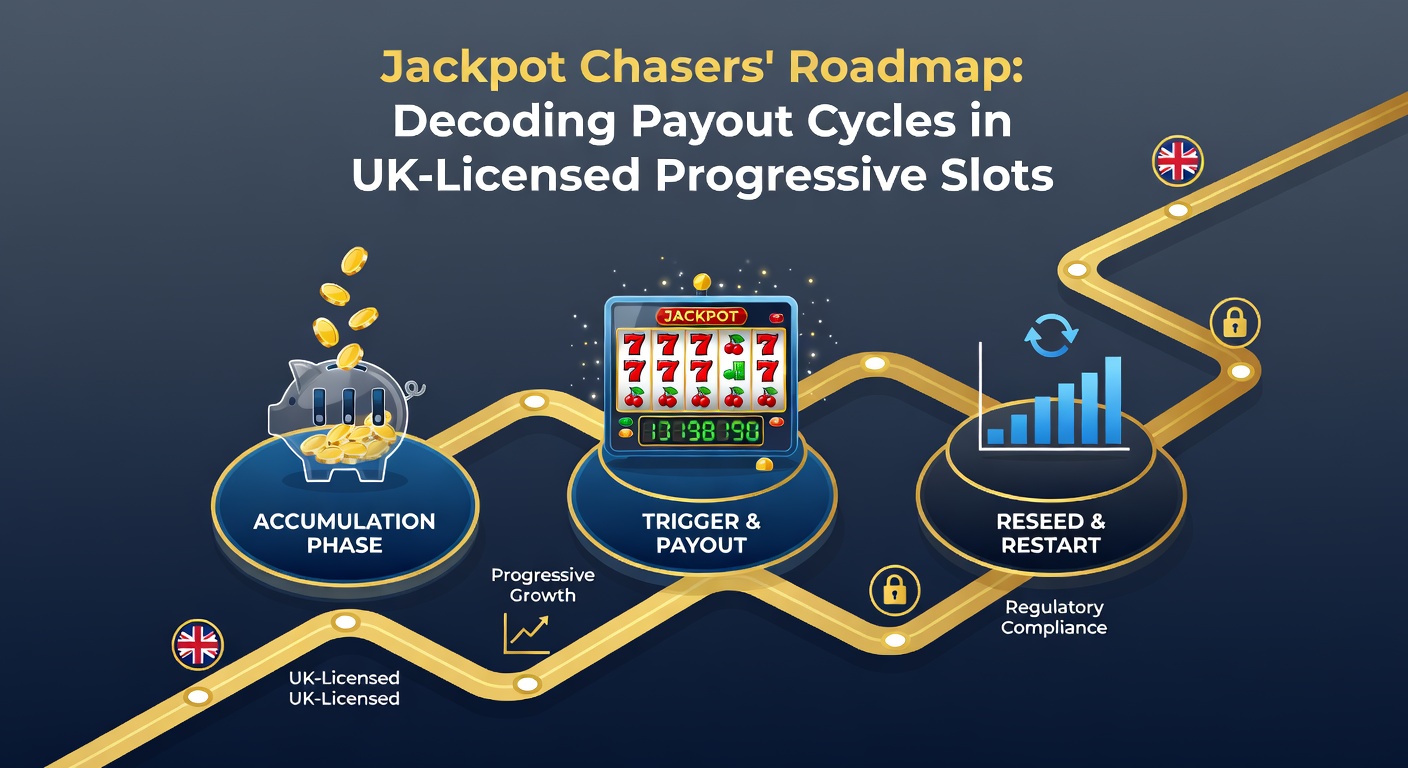
Cycles in progressive slots unfold in phases: the accumulation period where contributions from bets—typically 1-5% per spin—pile up steadily; then the trigger moment via RNG-determined symbols or bonus rounds; followed by a reset to a seed amount, often £10,000 or more for majors. Researchers at the Malta Gaming Authority, which oversees many cross-border operations, emphasize how certified RNGs ensure fairness, with payout frequencies logged and audited quarterly to prevent manipulation.
But here's the thing: not all progressives cycle the same way; networked ones like Mega Moolah connect global players, ballooning faster during peak hours, whereas local pools on single sites mature slower but hit more predictably. Figures from testing labs show must-hit-by jackpots—common in UK-licensed titles—guarantee payouts before reaching caps, say £250,000, turning chases into calculated waits as meters approach the limit.
One study from the University of Nevada's gambling research center highlights how cycle lengths average 3-6 months for majors, shortening with higher traffic; observers note that tracking tools reveal these timelines, helping chasers time entries when pots exceed average sizes by 20-30%.
UK-Licensed Nuances: Regulation Shapes the Hunt
Operators under UK licensing adhere to strict transparency rules for progressives, displaying real-time meters and contribution rates prominently; this setup, enforced through independent audits, lets players verify cycle health before playing. eCOGRA reports confirm that 95% of tested UK progressives meet advertised RTPs within 1% variance over millions of spins, building trust as chasers decode patterns without fearing rigged systems.
What's interesting surfaces in local jackpots versus globals: sites like those powered by Eyecon's Fluffy Favourites link clusters of machines, cycling every few weeks, while behemoths from IGT stretch across continents, demanding patience. Data indicates UK players favor high-volatility cycles, where pots brew longer but explode bigger, with average majors hitting £1-5 million.
Tools and Tactics for Decoding Cycles
Chasers arm themselves with trackers like Slot Tracker or Casino Listings' jackpot boards, aggregating live data from UK-licensed sites to map cycle histories; these platforms log thousands of hits, revealing average build times and reset values for titles like Age of the Gods. Experts who've pored over datasets advise focusing on pots at 80% of historical peaks, as probability ticks up subtly, although randomness reigns supreme.
And take Hall of Gods from NetEnt: records show cycles peaking mid-week after weekends swell contributions, with one notable £5.9 million drop in 2023 following a 4-month climb. People often combine this with bankroll strategies, betting max lines only near thresholds to maximize eligibility, since many majors require full wagers.
Yet software evolves; apps now use AI to predict cycle warmth based on wager volume, drawing from Gaming Laboratories International certified metrics that standardize reporting across operators.
Case Studies: Real Cycles Unraveled
Consider Mega Moolah's roadmap: this Microgaming staple seeds at €2 million for its mega tier, cycling every 20-50 days per public logs; a chaser in 2024 nailed £13.2 million after monitoring a pot that stalled at €10 million for weeks, spiking during European evenings. Similar patterns mark Divine Fortune, where minor jackpots cycle daily, building chaser confidence before majors loom.
There's this case from Playtech's Gladiator: UK sites saw a £2.1 million hit in late 2025 after contributions surged 40% over averages, per tracker data; observers link such accelerations to promo boosts, common on licensed platforms. These stories underscore how public histories—freely available on provider sites—form the chaser's bible, turning abstract cycles into navigable paths.
So patterns emerge: holidays accelerate builds via traffic spikes, while slow seasons stretch them, offering entry points for those with logs in hand.
Looking Ahead: March 2026 Shifts in Progressive Play
As March 2026 approaches, industry watchers anticipate refined cycle disclosures under emerging EU harmonization efforts, pushing UK-licensed operators to share historical hit data more granularly; this stems from directives influencing cross-border tech, aiming for uniform RTP tracking. Developers like Pragmatic Play roll out mystery progressives, where hidden meters defy old decoding but guarantee hits within bands, say £50,000-£100,000.
Turns out, blockchain integration tests in Gibraltar-regulated labs promise tamper-proof cycle verification, potentially revolutionizing chases by logging every contribution transparently. Figures project 15% more majors awarded by mid-2026, as mobile traffic—now 70% of UK play—fuels faster pools.
Players adapting early gain edges, using VR-linked trackers that visualize cycles in real-time across devices.
Conclusion
Decoding payout cycles in UK-licensed progressive slots boils down to data diligence, pattern spotting, and disciplined timing; chasers who map histories via trackers and audits navigate these roads effectively, capitalizing on swells without chasing illusions. Regulated transparency ensures pots grow fairly, with tools evolving to sharpen the hunt amid innovations like those slated for 2026. Ultimately, while jackpots remain elusive beasts, the roadmap—laid bare through logs and metrics—guides persistent players toward those life-altering spins, cycle after cycle.