12 Jun 2026
Connecting Loyalty Tiers to Accumulator Triggers in Licensed Mobile Gambling Applications

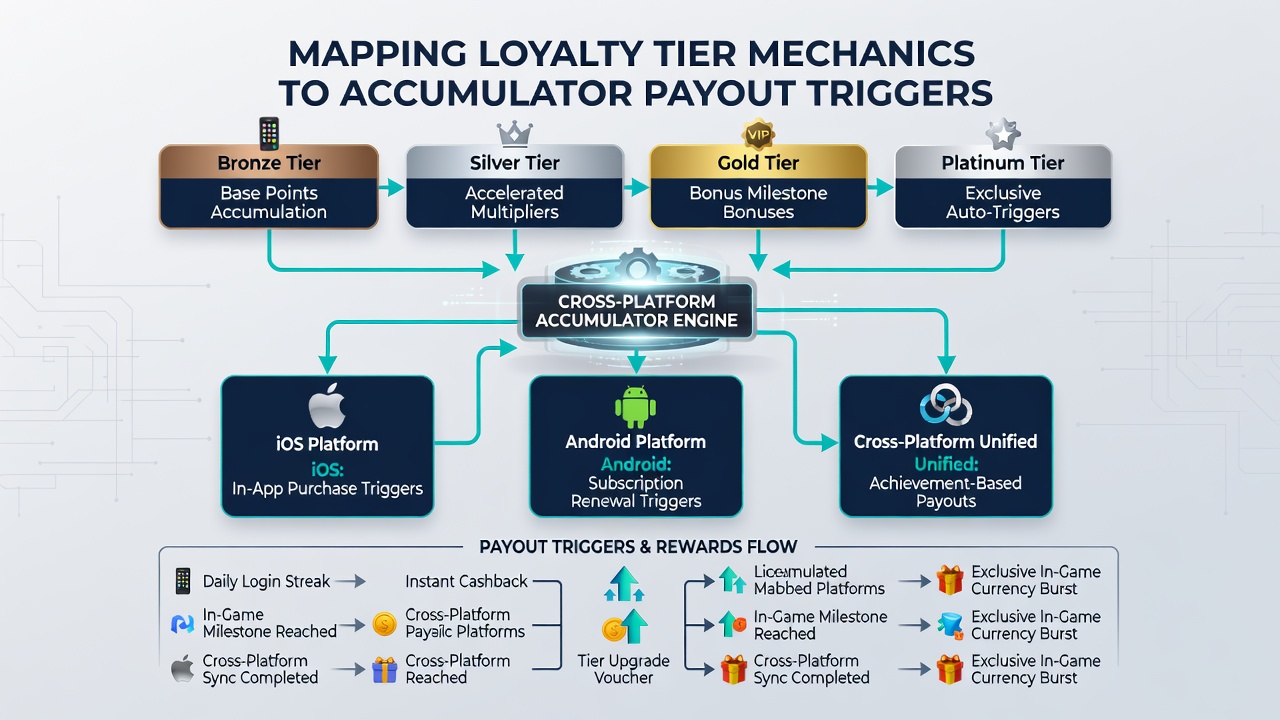
Operators on licensed mobile platforms structure loyalty programs around tiered progression systems that award points based on betting volume, deposit frequency, and session duration, while accumulator bets accumulate winnings only when multiple selections succeed in sequence. Mapping these two mechanics requires precise alignment so that higher loyalty tiers unlock modified payout triggers for accumulators, such as reduced minimum leg counts or boosted odds multipliers once a player reaches silver or gold status.
Core Components of Tiered Loyalty Structures
Loyalty tiers typically divide into four or five levels, beginning with entry-level access that offers standard point accumulation rates, then advancing through intermediate stages where players receive accelerated earning multipliers and access to accumulator-specific bonuses. Data from industry reports shows that progression depends on cumulative activity tracked within defined periods, often 30 or 90 days, after which points reset or carry forward depending on the platform's configuration. Those who study player behavior patterns note that tier advancement correlates directly with increased accumulator activity because platforms frequently tie tier benefits to accumulator completion rates.
Accumulator Payout Mechanics and Trigger Conditions
Accumulator payouts activate only after all selected outcomes resolve successfully, with operators defining trigger thresholds that include minimum number of legs, total stake requirements, and maximum odds caps. On mobile platforms these triggers integrate with real-time data feeds that update accumulator values instantly as individual events conclude. Researchers at academic institutions examining digital gambling interfaces have documented how platforms adjust these thresholds dynamically once loyalty tier data feeds into the same backend system that calculates accumulator returns.
Integration Patterns Across Mobile Ecosystems
Platform developers map loyalty tier data to accumulator engines through API connections that read a player's current level and apply corresponding rule modifications. For example, a player at the top tier might see accumulator triggers reduced from five legs to three legs while receiving an automatic 10 percent payout enhancement on successful outcomes. Observers note that this integration appears most consistently on platforms operating under North American regulatory frameworks, where operators must maintain transparent logging of all bonus adjustments linked to player status levels.
One documented case involves a major operator that adjusted accumulator minimums for platinum-tier users following a system update in early 2025, resulting in measurable increases in multi-leg bet volumes without altering overall house edge parameters. Similar adjustments have appeared in European markets where mobile applications synchronize loyalty databases with sports betting modules on a continuous basis.
Regulatory Oversight and Compliance Requirements
Licensing authorities in regions such as Ontario and several Australian states require operators to submit detailed documentation demonstrating that loyalty tier modifications do not create unfair advantages in accumulator payout calculations. According to reports published by the American Gaming Association, compliance teams must verify that tier-based triggers remain consistent across all user sessions and that audit trails capture every instance where loyalty status alters accumulator parameters. Platforms scheduled for regulatory review cycles in June 2026 will face additional scrutiny regarding the transparency of these mappings, particularly how mobile applications display tier-adjusted accumulator information to players before bet confirmation.
Technical Implementation Challenges
Developers encounter synchronization issues when loyalty tier updates occur mid-session while an accumulator remains active, requiring careful handling of state management to prevent payout discrepancies. Testing protocols involve simulating tier advancements during live accumulator events to confirm that trigger conditions update correctly without interrupting ongoing bets. Industry analysts have recorded that successful implementations rely on event-driven architectures capable of propagating tier changes within milliseconds across distributed mobile server networks.
Future Developments Expected by Mid-2026
Platform providers have announced plans to introduce tier-specific accumulator insurance features that activate automatically at higher loyalty levels, allowing partial refunds on near-miss accumulators. These features will require updated mapping logic to ensure insurance eligibility aligns precisely with current tier status at the moment of bet placement. Regulatory bodies in multiple jurisdictions have signaled that any such additions must undergo pre-launch certification, with particular attention paid to mobile display accuracy and real-time status verification.
Conclusion
The mapping of loyalty tier mechanics to accumulator payout triggers continues to evolve as mobile platforms refine backend integrations and respond to regulatory expectations. Operators maintain these connections through structured data flows that link player status directly to bet calculation engines, producing consistent outcomes across licensed environments. Documentation requirements and technical standards will shape further refinements ahead of the June 2026 compliance milestones referenced by multiple oversight bodies.